Journal
Ballet, modern jazz or contemporary: which dance to choose?
Ballet, modern jazz, street jazz, contemporary: four languages of the body, four different pleasures. Here is how to find your way, and where to begin.
Ballet: the backbone
Ballet is the foundation of everything. Barre, centre, jumps: a progression proven over three centuries, building placement, carriage and musicality. It is demanding, and that is exactly what makes everything else easier. A dancer trained in ballet will learn jazz or contemporary far more quickly, because they already possess the support, the ear for the music and the awareness of their own lines. Far from confining you, this rigour opens doors: it gives you the means to dance everything else.
Modern jazz: energy and interpretation
Modern jazz blends technique, musicality and interpretation. A warm-up, travelling steps, then a choreography worked on over time until it becomes your own. It is the most complete class for anyone who loves to dance "to the music", with character. You work on isolations, changes of rhythm, floorwork as much as jumps, and above all that way of telling a story through movement. To go further, the article "Modern jazz: origins and style" traces its history.
Street jazz: urban dance, taken seriously
Street jazz brings the groove and energy of the street, but with the rigour of a real class: isolations, grounding, accents. It is often the way teenagers step into dance, because the style is close to their music and progress comes quickly. Direct and rewarding, it soon gives you a taste for dancing, while building a real technical base to grow from.
Contemporary: weight, breath, freedom
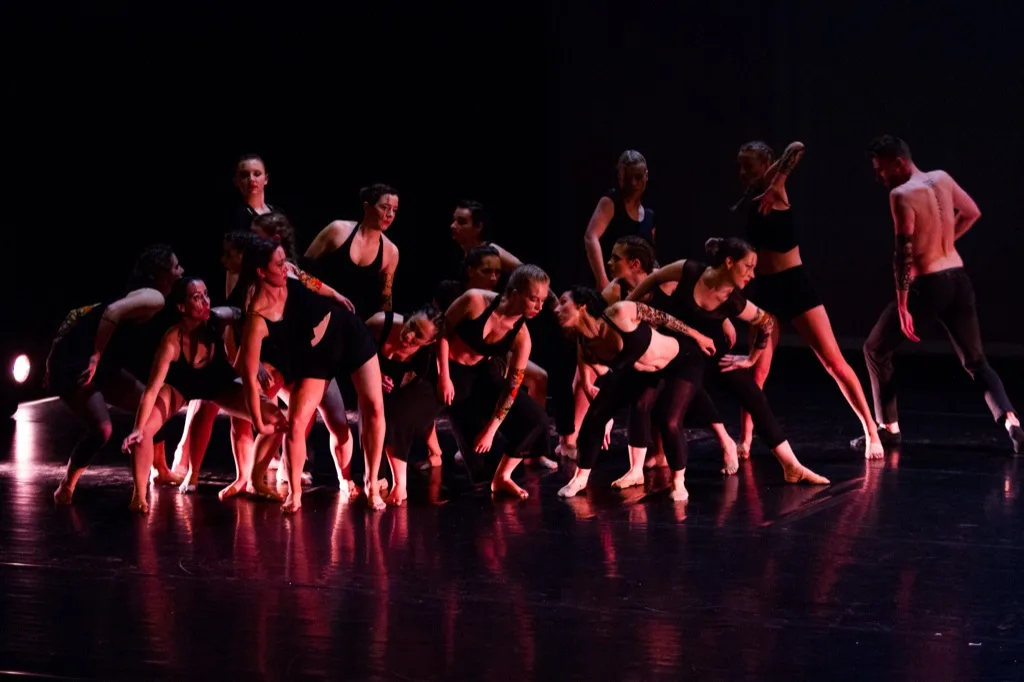
In contemporary, you work with the floor, the weight of the body, off-balance. The movement travels through the body rather than being manufactured, and everyone is invited to propose, not simply to copy. It is a dance that leaves plenty of room for improvisation and composition, and that makes you creative. The ideal complement to ballet, it loosens what technique has structured and invites each dancer to search for their own language.
Can you combine several disciplines?
Yes, and it is often an excellent idea. The disciplines do not oppose one another, they feed each other: the rigour of ballet gives the jazz dancer solid support, the freedom of contemporary softens ballet, street jazz brings groove and grounding. Many students take two classes and find a real balance in them. All the disciplines on offer complement one another naturally, as long as you do not spread yourself too thin in the very first year.
Depending on age, where to start?
For a child, ballet offers a solid base from age 8. A teenager will more readily begin with street jazz or modern jazz, which are more immediate. An adult, meanwhile, will choose mainly according to the mood of the moment: posture with ballet, energy with jazz, the relationship to the floor with contemporary. There is no set order, only different paths towards the same joy of dancing.
So, which one to choose?
There is no wrong choice, only the one that feels like you. Our advice: if you are starting young, begin with ballet, then open up to jazz or contemporary later. If you are looking above all for pleasure and energy, modern or street jazz are excellent starting points. And nothing stops you from combining them. For tailored advice, try find my class or come to a free trial class.