
Journal
Contemporary dance: understanding the discipline
Often little understood, contemporary dance intrigues as much as it attracts. Here is what defines it, and why it goes so well with ballet.
A dance of weight and breath
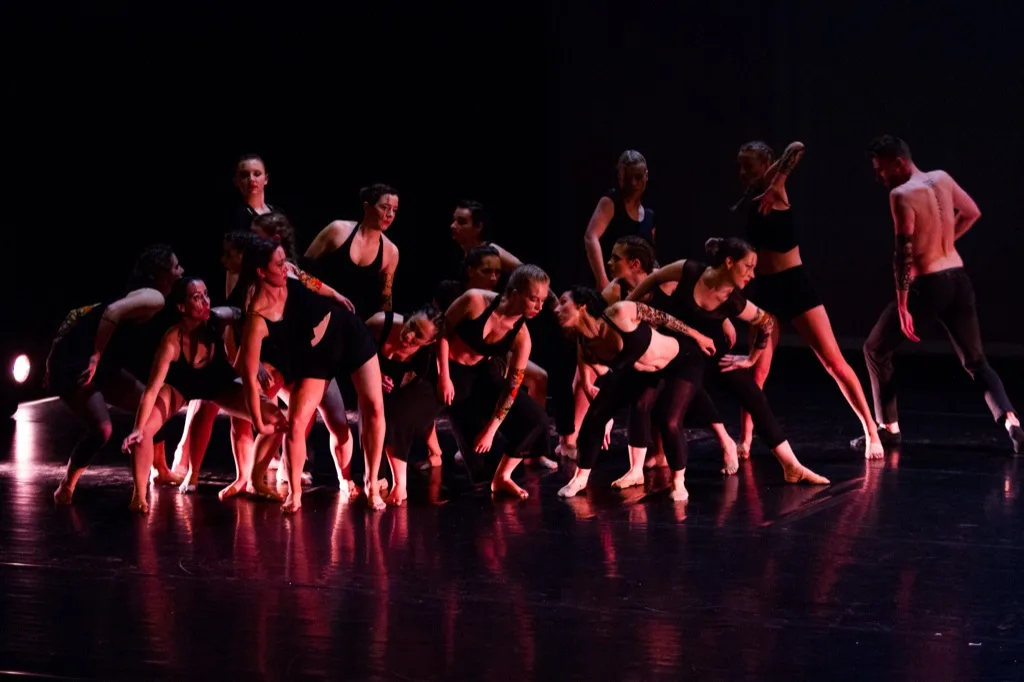
Where ballet seeks verticality and lightness, contemporary is concerned with the weight of the body, the floor, imbalance, the breath. The movement is not laid onto the body, it passes through it. You learn to yield to gravity rather than fight it, to let an impulse start from the centre and travel out to the extremities. The approach can be disconcerting in the first class, then it frees you: you stop manufacturing poses and start to move for real, with more fluidity.
The floor, a partner in its own right
In contemporary, the floor is not an enemy to be left as fast as possible. It is a support, a starting point, a place where you roll, slide and rise again. This floor work loosens the spine, strengthens the centre and teaches you to move from one level to another smoothly. That is why you bring soft clothing and covered knees: you go down to the floor, spread out on it, come back up from it. None of this vocabulary is reserved for the initiated, it is acquired step by step.
Offering, not just reproducing
Contemporary leaves plenty of room for improvisation and composition. You do not simply carry out an imposed routine: everyone is invited to search, to offer, to find their own language from a given prompt. This creative dimension often surprises beginners, used to copying a model. Here, a single prompt produces as many dances as there are dancers, and that is precisely what makes the discipline so alive. You gain an uncommon confidence, that of daring a movement that belongs to you alone.
A living heritage
Contemporary is a young dance, forever on the move, nourished by great choreographers who have rethought the body's relationship to itself and to space. Alexandra Gérard trained in the workshop of Carolyn Carlson, a major figure of this dance. That sensibility runs through her teaching and gives the class its depth, between rigour of movement and freedom of interpretation.
The ideal complement to ballet
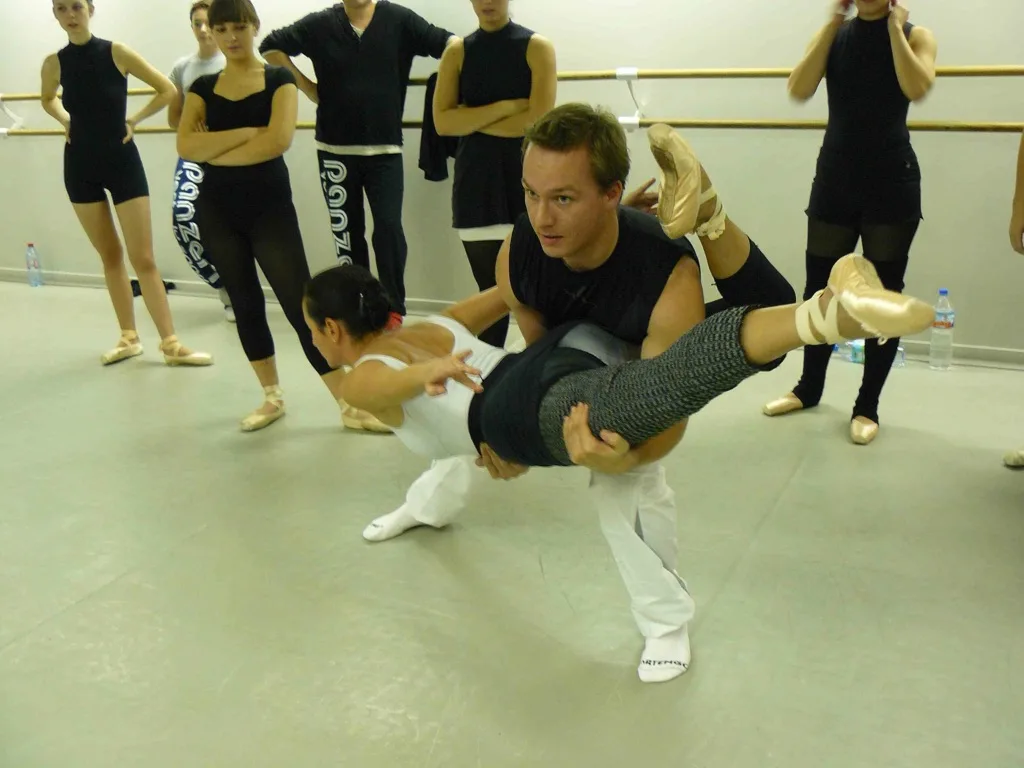
Far from clashing, contemporary and ballet feed each other. The rigour of ballet provides support, placement, an awareness of line that contemporary draws on; its freedom, in return, loosens what ballet has structured and makes the movement more organic. Many students practise both and find their balance in it: precision on one side, letting go on the other. To compare the disciplines and choose your own, the tool find my class points you in the right direction in a few clicks.
A dance that embraces the real body
Contemporary has this precious quality: it welcomes bodies as they are, without the sometimes intimidating ideal of ballet. It looks not for a fixed silhouette but for a quality of presence, a way of inhabiting movement. Many adults make peace with their bodies through it: you breathe, you take your time, you listen to your own support rather than judging yourself. For a beginner who hesitates, it is often the most reassuring door, the one through which you enter without fear of being watched.
Discovering contemporary in Nantes
The class is open to everyone from age 8, beginners welcome, teenagers and adults alike. It is held on rue des Perrines, in the east of Nantes, on the Allegro Harlequin floor (the standard of the Paris and London opera houses), which protects the joints during floor work. Bring soft clothing and covered knees. To find out whether this dance speaks to you, the best thing is still to try it: the first class is free, all year round. You can also browse all our classes to place contemporary among the other disciplines.