
Journal
What to wear to start dancing?
Do you need a leotard, ballet shoes, a tutu? To start out, the answer is simpler than you might think.
For the taster lesson: the simplest will do
There is no need to invest before you have tried. Leggings or shorts, a close-fitting t-shirt, hair tied back, bare feet or socks: that is all you need for a first lesson. What matters is that the clothing does not hamper movement and lets the lines of the body show, so the teacher can already observe and guide. Together, afterwards, you look at what is worth buying, according to the discipline chosen and the level. No pointless spending, no equipment stress: come as you are.
Why close-fitting clothing?
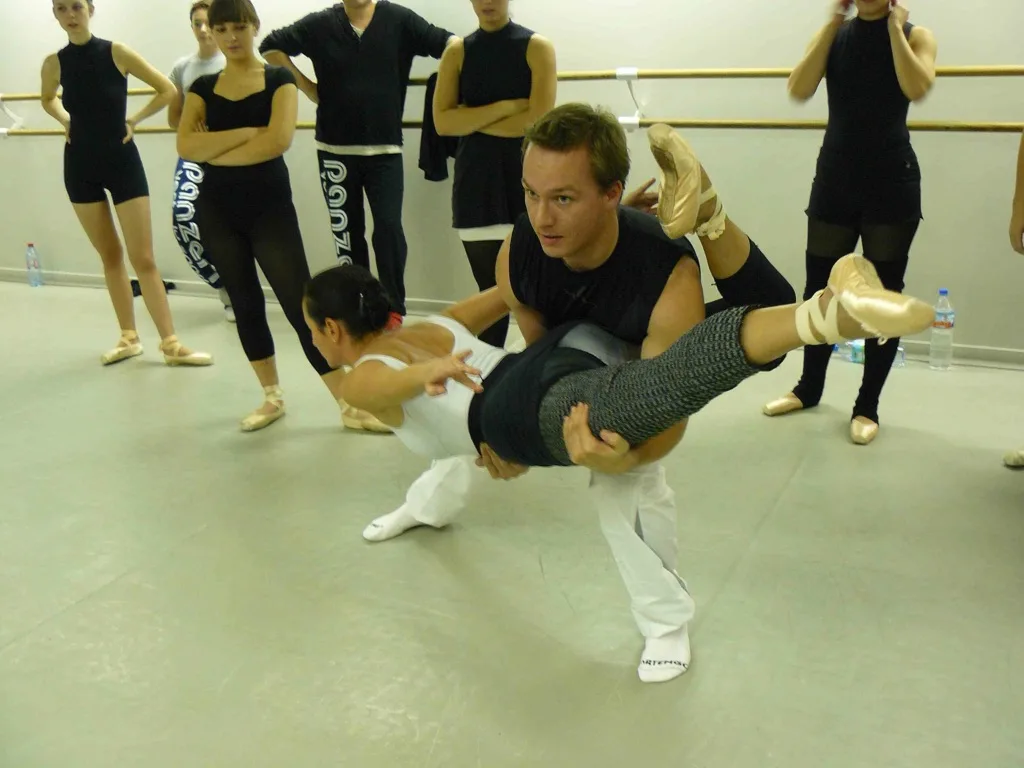
This is not a matter of fashion. Loose clothing hides the placement, the shoulders, the alignment of the pelvis, everything the teacher needs to see in order to correct accurately. Close-fitting clothing, by contrast, reveals the lines and allows precise guidance, lesson after lesson. This is especially true in ballet, where the smallest detail of posture counts. Here, the outfit is a teaching tool as much as a habit.
In ballet
For ballet, the outfit becomes more specific: leotard, tights, demi-pointe shoes, a neat bun. It is not purely aesthetic: it lets the teacher read the lines of the body and correct the placement. The bun clears the neck and face, and keeps hair from getting in the way during turns; we have in fact devoted a whole guide to it, "The dancer's bun". A simple rule: wait for the teacher's advice before buying shoes, so as to choose the right model.
In jazz and contemporary
Modern jazz and contemporary mainly call for supple clothing that lets you move: leggings, shorts, a crop top or a fitted t-shirt. Bare feet most of the time, or jazz shoes depending on the case. For contemporary, plan for covered knees, as there is a lot of floor work: long leggings or knee pads prevent little aches. Hair simply tied back is enough, without the formality of the ballet bun.
And for children in the awakening class?
For the awakening class from age 4, keep it as simple as possible: comfortable clothing in which the child feels free, hair tied back, and that is all. At this age, what counts is moving with pleasure, not wearing the right costume, and certainly not shutting a toddler into a stiff leotard. The outfit will become more specific later, if the child goes on to ballet. In the meantime, a garment they enjoy putting on is best: the pleasure of coming to the lesson sometimes starts right there.
Clean and comfortable clothing, above all
Whatever the discipline, a few principles apply to everyone: clean, well-fitting clothing in which you feel free to move, without jewellery that gets in the way or catches. Bring a small bottle of water and, for long hair, something to tie it back firmly. A child who does not have to keep hitching up their leggings or brushing away a stray lock concentrates better and has more fun. Comfort is not a luxury, it is a condition for dancing with a clear mind.
One piece of advice: do not buy too soon
This is the message to remember. For shoes, and even more for pointe shoes, it is better to wait for the teacher's advice: the wrong model bought too soon is a bad start for the foot. Start light, try it out, then kit yourself out once the class is chosen. A question about what to wear? Write to us, we will be glad to guide you.