Journal
What is a ballet class like?
Ballet is often imagined as more intimidating than it really is. Here, step by step, is how a real class unfolds, so you arrive relaxed on day one.
An unchanging structure, and that is reassuring
A ballet class always follows the same architecture, whatever the level: you start at the barre, move to the centre, then come the adage and the jumps. There is nothing dull about this regularity, quite the opposite, it reassures. You know where you are going, you find familiar landmarks from one week to the next, and you measure your progress on exercises you know. For a beginner, knowing what to expect is already half of feeling at ease.
The barre: waking up the body
The class always begins at the barre. Pliés, tendus, ronds de jambe: you warm up the body, set the placement and the turnout, look for support. It is repetitive, and deliberately so, because these foundations are built through repetition, season after season.
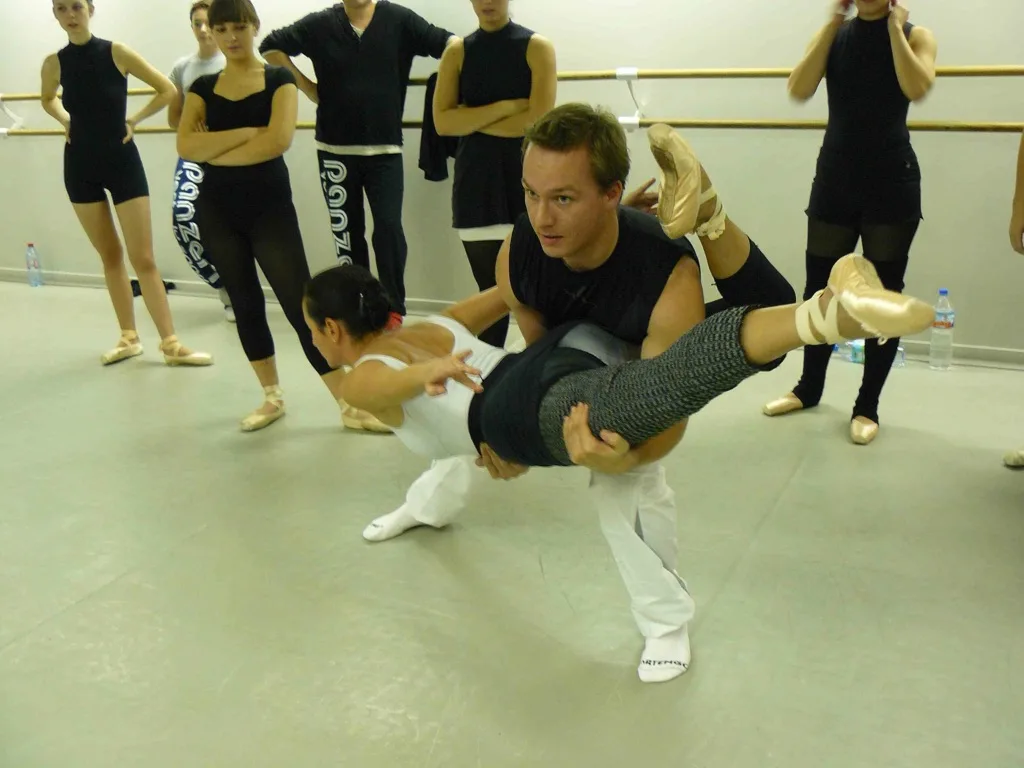
The barre is not just a warm-up, it is the laboratory of the class. This is where the teacher corrects a knee, straightens a back, adjusts a foot. Each exercise prepares what will come next in the centre. Here you learn patience and precision, two qualities that make all the difference in dance.
The centre: dancing in space
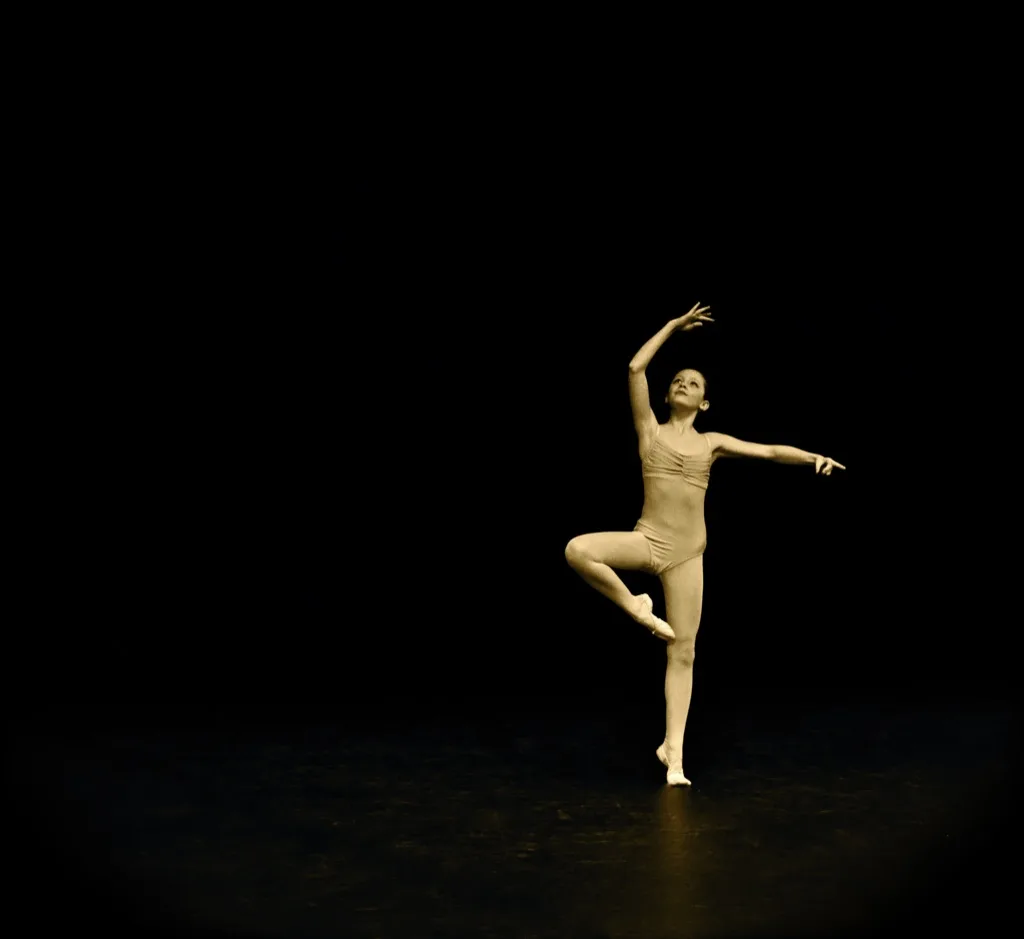
You then leave the barre for the centre: the same principles, but without support, in the middle of the studio. Balance becomes real work, and the sequences begin to look like dancing. Without the support of the barre, the body has to find its own axis. It is demanding, and deeply rewarding when the balance finally holds.
Adage and jumps: breadth and lightness
Then comes the adage, those slow, sustained movements that call for strength and control, followed by the jumps and travelling steps, more lively. It is often the students' favourite moment, the one where you truly feel that you are dancing. The adage works the line, the poise and the breath; the jumps bring energy and that sense of lightness you look for in ballet. The two complement each other and close the class on a lively note.
Music and vocabulary, two companions along the way
A ballet class is given to music and in a vocabulary inherited from French, used all over the world. These words, plié, tendu, arabesque, are not there to intimidate but to name each movement precisely. You learn them naturally, class after class, without having to revise them. If you would like to arrive with a few landmarks, our article on the vocabulary of ballet explains them simply.
Do you need to be flexible to start?
It is the most common fear, and it is unfounded. Flexibility is not a prerequisite, it is a result. It builds gradually, class after class, like strength and balance. You do not come to ballet because you are already 'gifted', you come to become so. At any age, the body responds as soon as you give it time.
Getting started without fear
There is no need to be flexible or 'gifted' to start: everything can be learned, at any age. The ballet class welcomes beginners from age 8, and adults at any age, in suitable groups. Later on, the strongest dancers can take up pointe technique, around age 11-12 and after an assessment of the foot. To choose your starting point, try find my class. And the best way to see what it is like is still to come along: the first class is free.