
Journal
Boys and dance: doing away with the clichés
"Dance is for girls": the cliché dies hard, and yet it does not stand up to scrutiny. Dance has a great deal to offer boys, and they give it back in kind.
A prejudice with no foundation
Throughout the history of dance, as on the greatest stages, men have always held a central place. The cliché that "dance is for girls" is a recent one, and purely cultural: nothing about the practice itself justifies a boy going without it. The most admired dancers the world over remind us every season that movement has no gender. Their jumps, their lifts, their presence on stage speak for themselves. What matters is the desire to dance, not the box someone would like to put you in.
What dance develops in a boy
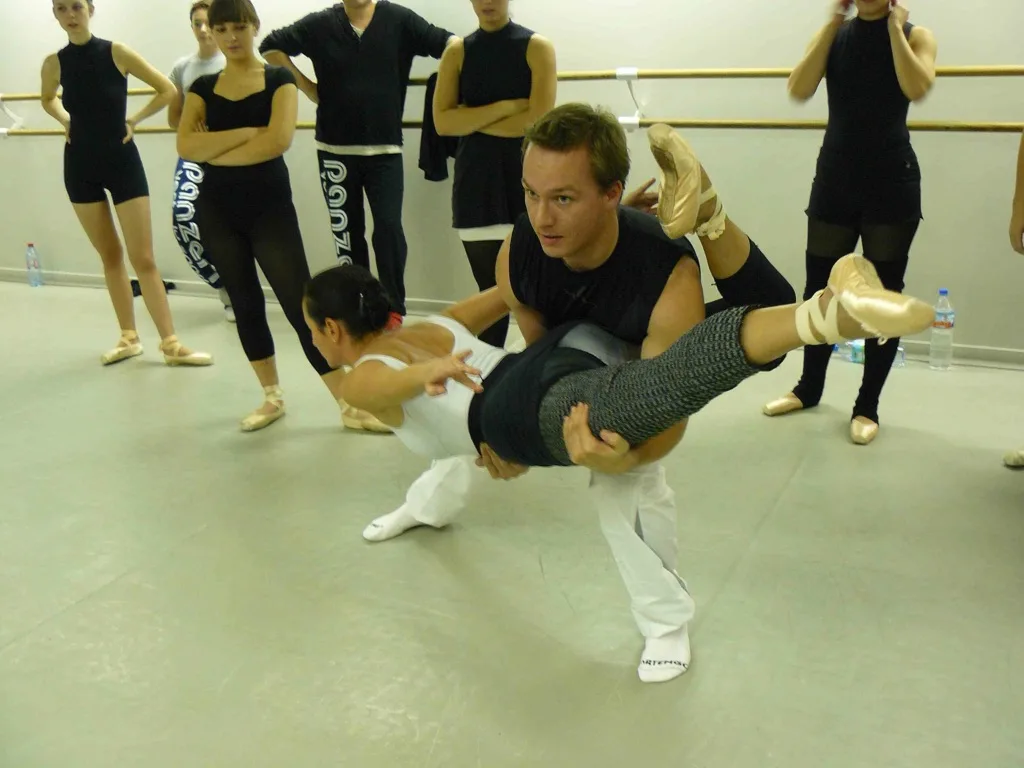
Strength, coordination, a sense of rhythm, control of one's body: dance is a complete sport, as physically demanding as most others. It also teaches discipline, attentiveness and presence, all qualities that count on stage and beyond. Jumping, landing without a sound, holding a balance, lifting a partner: each of these movements calls for power and a genuinely strong core. Many boys discover that they are more athletic than they thought, and that a dance class leaves them as tired as any conventional sports session.
A school for body and character
Beyond the physical, dance forges something deeper. Learning to start again without getting discouraged, to accept a correction, to hold your place within a group: these are lessons that reach well beyond the studio. A boy who dances grows in confidence, learns to stand tall and to look ahead. And high standards are never a punishment: at the Atelier du Mouvement, they always serve the pleasure of making progress.
Dancers in demand
It needs to be said plainly: in schools, companies and competitions, boys are few, and so very much in demand. The boy who perseveres soon finds opportunities, whether lifts, roles or performances, that the numbers keep open to him. Where a girl may sometimes have to stand out among many others, a motivated boy is quickly given roles that suit him. It is a real advantage, right from the early years.
Every dance is open to him
Street jazz and modern jazz, close to urban dance, are often a natural way in. But ballet and contemporary welcome boys just as warmly, at any age. Ballet in particular builds a technical foundation that makes everything else easier. It is also where the male dancer's role, in lifts and balances, takes on its full meaning. There is nothing to stop a boy from starting with a rhythmic discipline and then opening out towards another.
It's never too late to start
A boy can begin as a child, with éveil from age 4, but also as a teenager, often through a dance close to his own music. Many teenage boys take up dance later than girls and catch up quickly, carried along by their motivation. What matters is not having started early, but finding the discipline that makes you want to come back every week.
The role of parents
A child who wants to dance deserves encouragement, with no fear of what others might think. The best test is still a trial class: you can see at once whether the pleasure is there. And pleasure, in a boy just as in a girl, is not up for debate. To support that wish is to give your child a complete sport, an artistic pursuit and a fine lesson in confidence.
Getting started in Nantes
At the Atelier du Mouvement, on rue des Perrines, boys and girls dance together, in groups formed by age and level. The first trial class is free, all year round: the perfect chance to move past the clichés. Not sure which discipline suits best? Our find my class tool points you in the right direction in a few clicks.